Topicals Review 2026: The Brand That Made Treating Your Skin Feel Good
Disclosure: TrendsInReview may earn a commission if you buy through links on this page, at no extra cost to you. We only feature brands we have independently researched.
Skincare has always been happy to sell you glow. It has been far less comfortable talking about the stuff people actually deal with — hyperpigmentation, eczema, ingrown hairs, scars that will not fade. Topicals launched in 2020 to close that gap, wrapping medical-grade actives in loud pink tubes and pairing the whole thing with a mental-health advocacy mission and a partnership with the JED Foundation. It worked: the brand is now on Sephora shelves, on Amazon, and all over TikTok. This Topicals review cuts past the branding to the two things that decide whether a purchase is worth it — does Faded actually fade anything, and can you live with the smell? Our TrendsInReview team read through hundreds of verified reviews, independent multi-month tester reports, and the brand’s own clinical claims.
What Is Topicals?
Topicals is a Black-owned skincare brand focused on what it calls stigmatized skin conditions — discoloration, post-blemish marks, scars, eczema-prone and reactive skin. Every product is fragrance-free, dye-free, vegan, cruelty-free, and dermatologist-tested, with formulations developed alongside a scientific advisory board. The brand is unusual in two ways: its packaging is deliberately vibrant, on the theory that treatment products should not feel medical and shameful, and its marketing budget goes substantially into mental-health advocacy rather than pure aesthetics. It has been covered by Marie Claire, The Cut, and Allure, and now sells through its own site, Sephora, and an official Amazon storefront.
What Makes Topicals Stand Out
- Actives that target discoloration specifically: tranexamic acid, kojic acid dipalmitate, azelaic acid, niacinamide, alpha-arbutin, and glutathione in a single formula — a stack most people would otherwise layer from three products.
- Formulated for all skin tones: a stated design constraint, not a marketing line — and the reason the brand resonates with shoppers historically ignored by pigmentation products.
- Face-and-body use: Faded is safe for legs, thighs, chest, and back, which is where a lot of dark spots and post-blemish marks actually live.
- A mission with substance: mental-health advocacy and a JED Foundation partnership from launch, not a retrofitted campaign.
- A genuine low-risk entry point: the 15 mL mini of Faded costs a fraction of the full size — the smartest way to test a product with a notorious smell.
Best Topicals Products in 2026
The Topicals Faded serum is the reason the brand exists. Start there, and add from the surrounding range only once you know how your skin responds.
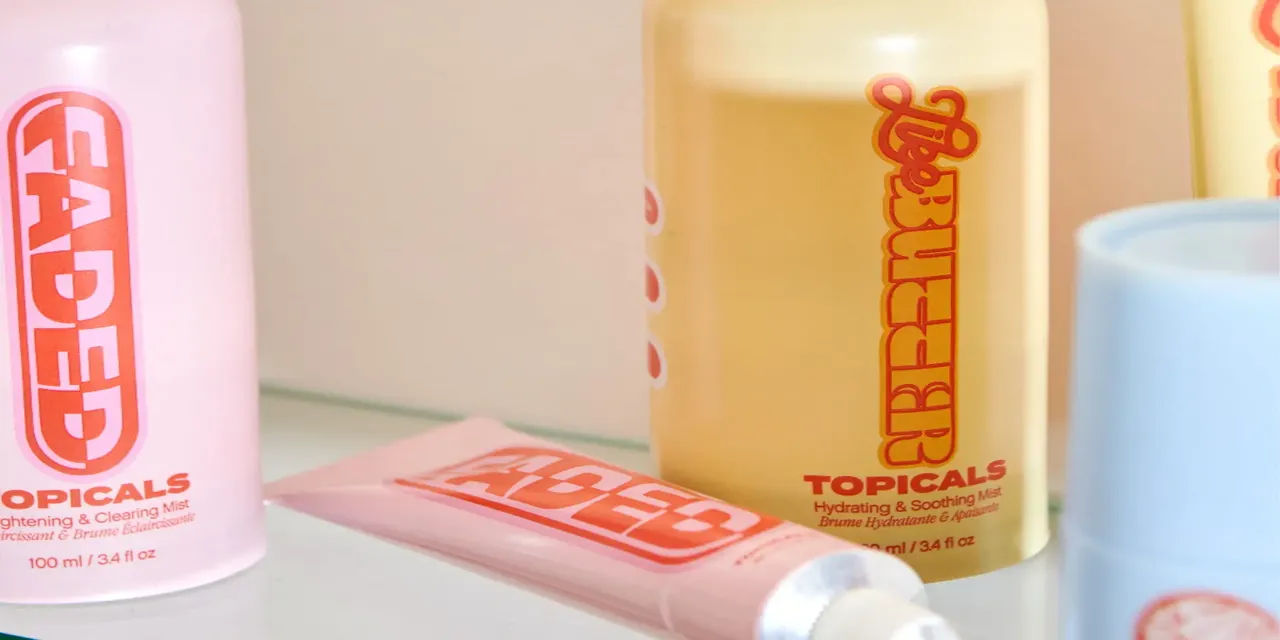
1. Faded Brightening & Clearing Serum — $38 (50 mL) or $18 (15 mL mini)
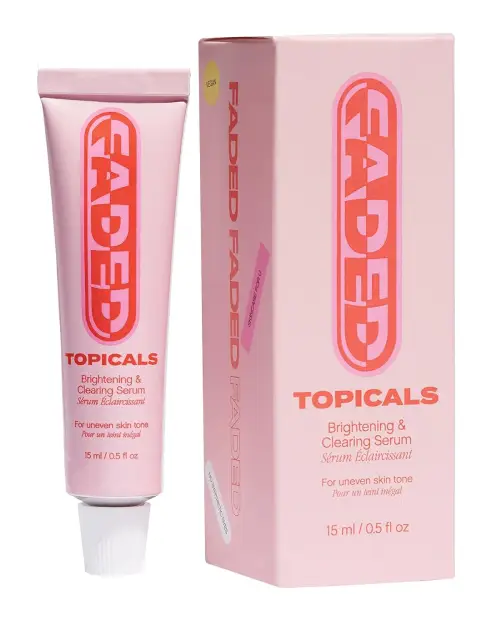
A gel-cream serum combining tranexamic acid, niacinamide, azelaic acid, kojic acid dipalmitate, alpha-arbutin, and glutathione to help visibly reduce the appearance of dark spots, post-blemish marks, and uneven tone. Dermatologist-tested and suitable for all skin tones. Start once a week and build to daily. Do not layer it with other AHAs, BHAs, or retinoids — the brand explicitly warns against it. Always follow with SPF.
2. Like Butter Hydrating Mask — around $40
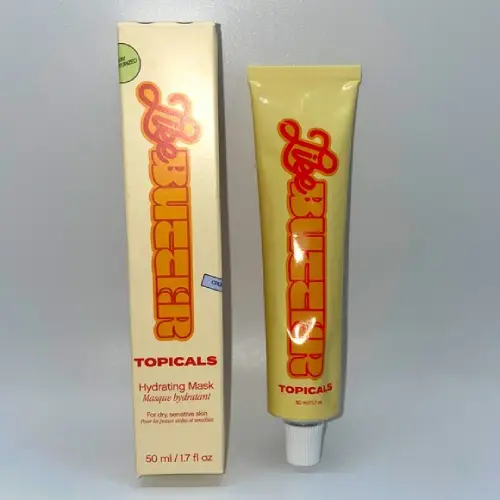
The soothing counterpart. A rich, colloidal-oatmeal-based mask designed for dry, itchy, and reactive skin, usable on face and body. Reviewers with dermatitis-prone skin describe it as the product that calmed things down. Apply to slightly damp skin — the most common complaint (pilling) comes from applying it to dry skin.
3. Faded Brightening & Clearing Mist — around $38
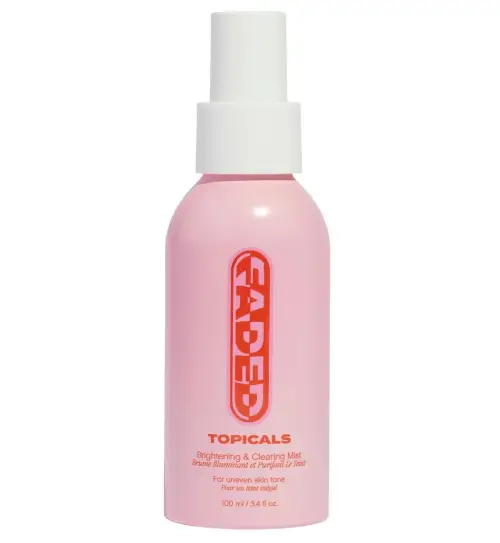
The green-tea-scented mist version of the flagship, formulated for body use on hard-to-reach areas. Note: earlier batches drew complaints about the sprayer; the brand has since relaunched the mister.
4. Slather Exfoliating Body Serum
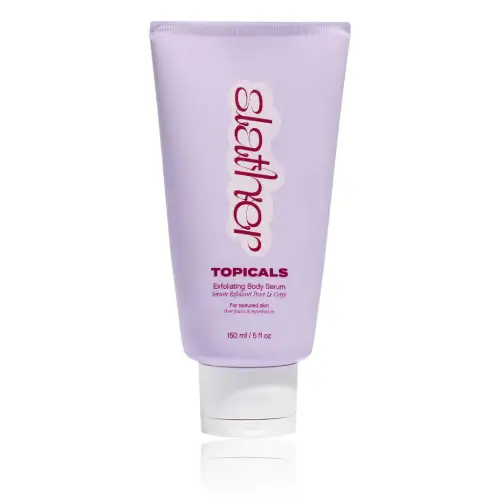
Retinol plus AHAs for body texture. Independent testers who tried the full range name this as the third essential alongside Faded and Like Butter.
5. High Roller Ingrown Hair Tonic
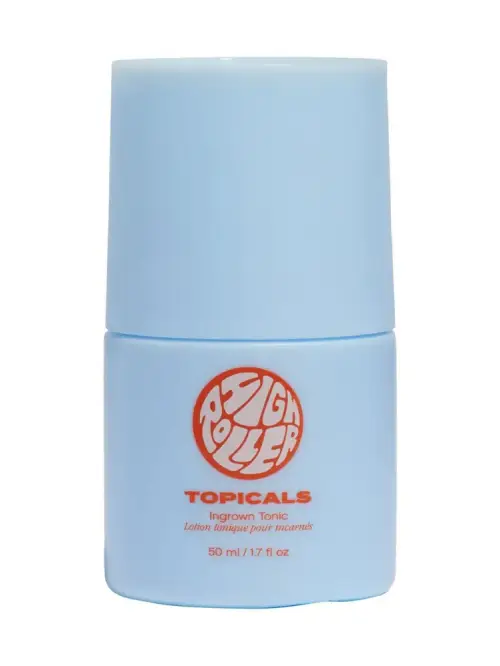
A targeted rollerball tonic for ingrowns and bumps after shaving or waxing — another everyday problem the mainstream aisle mostly ignores.
What Real Customers Say — Including the Smell
Let us address the elephant. The original Topicals Faded serum smells strongly of sulfur, and reviewers do not sugar-coat it — one described gagging every time she squeezed the tube. The brand’s explanation is chemically sound: glutathione contains a cysteine chain that produces a sulfur-like odour, and Faded is fragrance-free precisely so it stays gentler. The scent fades within minutes on skin. Crucially, as of 2026 Topicals offers an unscented reformulation, which has become popular with exactly the people this was a dealbreaker for.
On results, the pattern is encouraging and specific. Faded carries more than a thousand five-star reviews across Sephora and the brand’s own site. Independent testers report visible improvement within one to three weeks for fresh post-acne marks, and six to eight weeks or longer for older, deeper scars. One reviewer with melasma described a stubborn forehead patch lightening substantially over consistent use; an NBC tester saw meaningful lightening of year-old leg scars over two months. Like Butter draws devoted praise, particularly from people who struggle to keep up a moisturizing routine at all. The complaints are real but narrower: air-filled tubes that seem half empty after two uses, sharp metal tube edges, occasional dryness or irritation from the actives, sticky lip-product textures, and at least one reviewer whose customer-service query went unanswered. If you want the pigmentation angle in a broader routine context, our
skincare trends guide covers where targeted treatments fit into a modern routine.
Social Media & Cultural Impact
Topicals is one of the few beauty brands whose social presence is genuinely part of the product. The Instagram feed talks about mental health as often as it talks about serums, and the founders — young women of colour building in a category that historically ignored them — are visible and credible. Its Topicals Insider community programme has produced some of the most detailed customer reviews we encountered anywhere in this research. The brand has also, notably, been adopted by exactly the audience it was built for, which is not something every mission-led launch can claim. Readers exploring adjacent territory may find our roundup of
cult clean beauty brands a useful companion.
Is Topicals Worth It? Our Verdict
Yes — for the right problem. This Topicals review finds a brand that does one difficult thing genuinely well: it makes a well-formulated, multi-active pigmentation treatment that works across all skin tones, at a price far below prescription alternatives, backed by consistent multi-week tester results. Buy the $18 mini first. Give it four weeks minimum before judging. Wear sunscreen religiously or you will undo the work. And if the sulfur smell is a hard no, buy the unscented reformulation rather than skipping the brand. Faded: 4.5/5. Like Butter: 4.5/5. Packaging: 3/5.
FAQs
Does Topicals Faded serum actually work?
For the appearance of dark spots and post-blemish marks, the evidence is strong — over a thousand five-star reviews and consistent independent tester results. Expect visible improvement in one to three weeks on fresh marks and six to eight weeks or longer on older scars. It will not erase deep scars entirely.
Why does Topicals Faded smell like sulfur?
Glutathione, one of the key actives, has a cysteine chain that produces a sulfur-like odour, and the formula is fragrance-free so nothing masks it. The smell dissipates within minutes. An unscented reformulation is now available.
Can I use Topicals Faded with retinol?
No — the brand advises against layering it with other AHAs, BHAs, or retinoids, which can cause irritation, dryness, or breakouts. Alternate nights instead.
Is Topicals safe during pregnancy?
Topicals states Faded is safe for pregnant women but recommends consulting your doctor first. As with any active skincare during pregnancy, check with your healthcare provider before starting.
Comments (0)
All comments are reviewed and approved by an admin before appearing publicly.
No comments yet — be the first to share your thoughts.